06 October 2010

Salt Also Drives Obesity

Obesity and diabetes are two tightly interlinked conditions that almost always cannot exist without each other. Weight and fat gain, a high-salt and –sugar diet, and a sluggish lifestyle could all conspire to raise the levels of blood glucose and blood fat. Such conditions in turn raise health risks that, if untreated, could lead to more serious physical problems, among them type-2 diabetes.

Health-indicator statistics of the Department of Health rank diabetes as the ninth-leading cause of death in the Philippines, affecting 1 out of 25 Filipinos. Some 3.36 million Filipinos are estimated to be afflicted with diabetes, which is a chronic disease characterized by high blood-sugar levels resulting from defects in the body’s ability to use and produce insulin. 

While the link between obesity and diabetes has long been established, recent findings have traced the relationship between salt intake and obesity. In a recently published report in the journal Progress in Cardiovascular Diseases, scientists from Finland claimed that the increased intake of salt has apparently played an important role in the increased consumption of soft drinks, and therefore in the increase of energy intake.

Dr. Heikki Karppanen of the University of Helsinki and Dr. Eero Mervaala of the University of Kuopio wrote, “Higher consumption of sweetened beverages was associated with both a greater magnitude of weight gain and an increased risk for development of type-2 diabetes.”

The groundbreaking research also noted the worldwide trend in the increase of age-adjusted blood pressure since the late 1980s. This increase, wrote the authors, “appears to coincide with the turn of the sales of food-grade salt from a decreasing trend to a rapid increase in the later 1980s and in the 1990s.” The study adds that increasing intakes of sodium found in common salt necessarily produce a progressive increase in thirst; and between 1997 and 2001, the energy intake from soft drinks also increased by 135 percent, adding about 278 kcal to the average person’s daily energy intake.  

Common salt contains only sodium chloride, which is known to be the most significant cause of high blood pressure. Even a small rise in blood pressure increases the risk for coronary and other serious cardiovascular diseases, such as heart attacks, strokes or heart failure. It is a medical fact that the human body needs only very small amounts of both sodium and chloride.

The Finnish research drives home the relationship between salt and calorie intake that could lead to obesity and other health problems. But while people cannot live without these flavors, their consumption could be moderated to healthier levels. There are also healthier options now widely available, so while it’s not yet too late to switch to more health-conscious ways, it would be wise to explore healthy forms of sugar and salt.

Where to start after one has identified that sodium is the hidden enemy in common salt? So-called salt-free seasoning blends are a mixture of flavorful dried herbs and spices that don’t contain sodium chloride. Salt substitutes, on the other hand, replace some or all of the sodium in salt with other minerals such as potassium or magnesium. Potassium chloride is a common salt substitute. But salt substitutes, or some low-sodium salts, often taste bitter and aren’t recommended for people on a potassium-restricted diet.

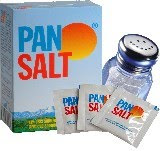
Fortunately in the Philippines, there’s no need to go out further in search of healthy salt. PANSALTâ, the good-tasting, low-sodium salt has been enjoying brisk sales in Metro Manila.  Imported from Finland and distributed exclusively by Accord International, Inc., PANSALTâ is the healthy mineral salt with Iodine that contains only 56-57% sodium, and is the product of extensive research by Finnish health experts. PANSALTâ is likewise rich in the essential minerals Magnesium and Potassium, both of which help get rid of harmful sodium in the body. PANSALTâ has further been found to remarkably improve the therapeutic effects of treatment drugs for hypertension. In addition, its component Magnesium plays a vital role in the secretion and function of insulin, making it very beneficial for those suffering from diabetes and its complications.   

PANSALTâ is virtually devoid of the harmful effects characteristic of common salt and has the best taste profile among all the healthy salt options and alternatives in the market today. So if you watch your diet to avoid or manage hypertension, diabetes or obesity, or if you simply wish to maintain a healthy lifestyle, PANSALTâ is the tastier, healthier choice.

Imported by Accord International, Inc., PANSALTâ is now available in major supermarkets nationwide & in select Mercury Drugstores.

For more information, visit www.pansalt.ph or call (632) 531-4881.

23 September 2010

Watch Out for Hidden Salt

          With Christmas virtually here , there’s no saying no to food once the season’s parties come rolling in. And holiday foods being what they are—rich, richer, and richest—the yearly binge could give rise to a number of health problems like hyperacidity, or exacerbate certain conditions like hypertension.

            While it is admittedly hard to monitor one’s salt intake—which, according to medical experts should not exceed 5 g a day—it would be wise to be aware of where salt lies hidden in our everyday food. Knowing these tips would also help revelers steer their way to safer choices at the holiday buffet.

            According to the Food and Nutrition Research Institute (FNRI) of the Department of Science and Technology (DOST) many Filipinos eat more salt and sodium than required. Moreover, the Filipino diet already contains about 2000mg of salt inherent in foods (particularly animal foods). “With the addition of soy sauce, fish sauce, MSG, and other salty condiments during cooking, or seasonings at the table; or the excessive intake of salty fish and highly salted fermented fish or sauces (bagoong), the sodium intake increases drastically to about 6000 mg (about 15g of salt),” said the FNRI. 

            Following are quick tips on how to limit sodium (the main ingredient of salt) intake:

  • Eat natural foods with little or no added salt.
  • Use herbs and spices to naturally flavor or season food instead of table salt, monosodium glutamate or highly salty condiments.
  • Limit intake of preserved and processed foods, cheese, canned soups, canned fruits and vegetables, instant noodles, and canned meats.
  • Limit use of soup cubes.
  • Limit intake of salty, canned, and preserved meats and fish (ham, bacon, tinapa, dilis, daing).
  • Limit addition of condiments (soy sauce, bagoong, patis and ketchup).
  • Limit intake of salted snacks.
  • Read labels to find out the sodium content of packed or preserved foods.

The lists issued by western health experts even include keeping fast foods, sausages, potato crisps and chips, sauces and pickles, peanut butter, prepared mixes and prepackaged frozen dinners at a minimum.

Medical experts and evidence-based science have shown that too much sodium is harmful to humans as it increases the risk of developing high blood pressure and its complications, such as strokes, heart attacks, kidney damage, and possibly asthma and some cancers.

So is there anything left to eat? There’s a good chance there is, with PANSALT®, the healthier salt for Filipino health buffs and those on special dietary regimens. PANSALT® contains Iodine, cuts sodium chloride to 56-57 percent, and is rich in the essential minerals Magnesium and Potassium, which are not present in common salt.

PANSALT®’s unique and patented formula is the product of years of research and study by health experts from Finland . It has the same savory flavor as common salt, minus the sodium overload. It has also been found to remarkably improve the therapeutic effects of drugs used for the treatment of high blood pressure, and is virtually devoid of the harmful effects characteristic of common salt.

Because it has found great consumer acceptance—it has the best taste profile among low-sodium salts in the market, without any bitter aftertaste— PANSALT® is already being used in more than a thousand food products from hundreds of manufacturers across the world. PANSALT® now flavors prepared meat products and processed food; prepared fish, dairy, hamburger, and bakery products; snack food; seasonings; and flour mixtures.

Imported by Accord International, Inc., PANSALT® is now available nationwide. 

Low-Sodium Living In a Nation of Eaters

Filipinos like it five times a day.  Meals, that is.  Breakfast.  Morning snack.  Lunch.  Afternoon snack.  Dinner.  If we're lucky, we might even squeeze in a little dessert before finally calling it a day.

Eating many meals in a day is not necessarily bad.  But that depends.  Consider several factors such as your portions, nutritional value, and salt content.

The recommended daily allowance for salt is 4g to 6g a day.  And there is a reason for this: studies show that excessive salt consumption increases one's risks for heart disease and stroke, not to mention kidney stones and complications with diabetes.  It would be prudent therefore, to limit one's salt intake.

But cutting back on salt especially in a nation enamored with food – is this even possible? 

Filipinos love food and the many reasons why.  Food nourishes.  But also, food excites – the experience of different flavors stirs in us a new sense of life.  Food brings us together – see us gather at the table as a family, see us assemble as communities at our fiestas.  But most of all, food satisfies – who does not enjoy leaning back after a good meal and rubbing one's warm belly?

Is it possible to give all that up? It is.  With PANSALT®, mineral salt but with 43% less sodium, you can go light on the sodium but heavy in flavor.  So you actually give nothing up – except for high sodium and its harmful effects.

Developed in Finland by health experts after years of extensive research, PANSALT® is ideal for the health-conscious, hypertensives, and stroke patients.  It has also been found to improve the therapeutic effects of treatment drugs for high blood pressure. 

Breakfast, lunch, dinner, and our two snacks in between.  Combined with a little more thoughtfulness to our meal portions and ingredients plus a sprinkling of low-sodium PANSALT®, who's to say Filipinos can't still get it five times a day? 

PANSALT® is available in 50g (50 x 1g sachets) and 450g boxes at leading supermarkets and drugstores.  Learn more about PANSALT by visiting www.pansalt.ph or calling (02) 531-4881 / 0917-811-SALT (7258).

19 July 2010

New Era General Hospital uses PANSALT®

Good News for the patients of the New Era General Hospital!
They can now take advantage of the many health benefits PANSALT® has to offer as it is now made available for them.

05 April 2010

Scared of Salt? Don't be!

Salt so long has been painted a villain to health – it is blamed for high blood pressure and its complications such as heart disease, stroke and kidney damage. But just as most things in life, take this bit of information with a grain of salt.

Though demonized many a time, salt is not as sinister as you might think. NaCl is a good thing – it is a nutrient essential to human life. Salt helps regulate various bodily processes such as digestion, nerve transmission, and even muscle contraction. And though its name has been dragged into many debates on heart diseases, salt regulates heart contractions – after all, the heart, too, is a muscle.

As an electrolyte, it facilitates osmosis, or the process that involves the transportation of nutrients across cell membranes. Salt helps maintain that critical balance between cells and body fluids.

Too little salt has its own adverse effects as well. Too little of it can lead to dehydration, muscle cramps, dizziness, and water intoxication. And because of its vital role in osmosis, studies have shown that sodium-deficiency can also contribute to the depletion of other minerals the body needs such as calcium, magnesium, potassium and B vitamins.

But life isn’t just a series of bodily processes, is it? When eating, who thinks of food as a bulk of nutrients to be broken down and distributed through the bloodstream?

Food is not meant for sustenance alone, it is meant to be enjoyed. So don’t languish in tastelessness just for the sake of longevity.

Give your body – and your taste buds – a treat with the salt that has the right balance of minerals. PANSALT® is real salt but with 43% less sodium and with the essential minerals potassium and magnesium.

PANSALT® was developed in Finland by health experts after years of extensive research and is ideal for the health-conscious, hypertensives, and stroke patients. It has also been found to improve the therapeutic effects of treatment drugs for high blood pressure and is virtually devoid of the harmful effects of common salt.

Healthy living need not be bland. PANSALT® is available in 50g (50 x 1g sachet) and 450g boxes at leading supermarkets and drugstores. For more information, visit www.pansalt.ph or contact (63-2) 531-4881 / 0917-811-SALT (7258).